
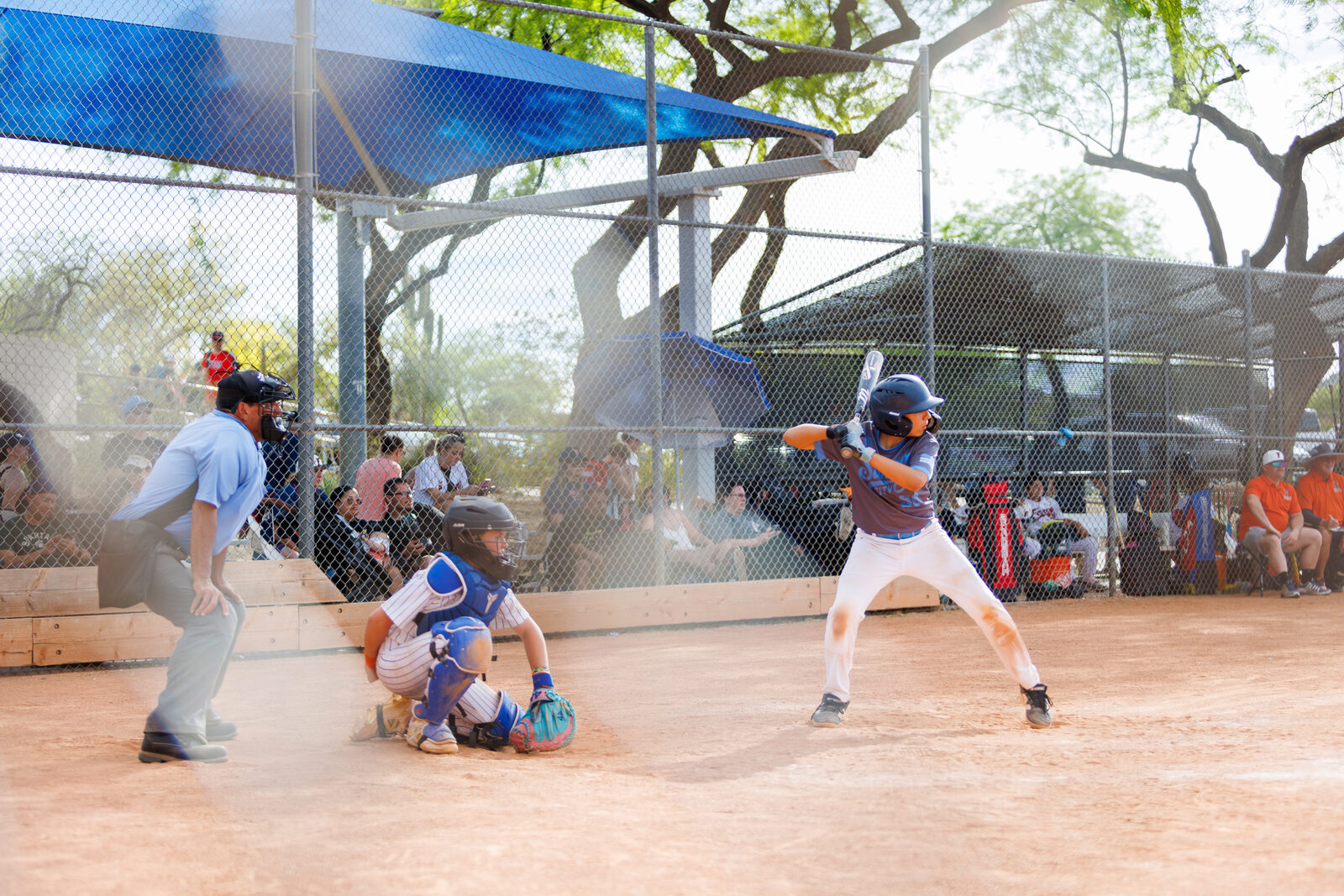
Group I — The Fundamentals Year
Hitting mechanics, throwing motion, footwork. Math + reading two periods a day with our credentialed teacher.
Five new variations blending V1 Editorial Magazine (dark + brass + cyan) with V3 Heritage Yearbook (cream + ink + vermilion + sepia). V1 and V3 themselves are kept at the bottom as reference.
Each hybrid uses its own design logic · all photos 4K Unsplash placeholders
Dark cinematic ground + yearbook structural conventions (plate markers, roster lists, printed honor-roll register, brass laurel dividers). The dark editorial side adopts the discipline of a yearbook page.
Forty-three students. Three groups. One roof in Temecula. These are the pages of our year — printed, not posted.
⚘
⚘
⚘
⚘
Fourteen pro cages. A HitTrax simulator on the wall. Twenty-thousand square feet of grit, lined paper, and chalk dust. The kids who walk through these doors get coached on hitting, on hand-writing, and on how to look an adult in the eye when they shake hands.
This is the third edition of the Swing City yearbook. Names are real. Grades are real. The exit-velo numbers, the GPA bumps, the hand-written essays under the magnet on the equipment-room fridge — all of it, real. Turn the page.
Grouped by school grade. Each group rotates through baseball, classroom, and strength every day.
Hitting mechanics, throwing motion, footwork. Math + reading two periods a day with our credentialed teacher.
HitTrax data introduced, position specialization begins. Algebra prep, science labs, writing every day.
Rapsodo, video review, position-specific training. High-school-prep academics with HS-level math + lab science.
Half the day at the desk, half at the plate. Credentialed teachers, individualized math, daily writing, lab science.
Five dedicated training programs, every one staffed by a coach Tony hand-picked.
Age-banded strength program. Squat-pattern, hinge, pull, push — the four lifts every athlete learns before they touch a loaded bar. Built around growth-plate-safe loading and tested over three years with our middle-school cohorts.
Every athlete moves through a written progression posted on the wall — printed in the same typeface as this page. Coach Reyes leads two sessions a day with no more than six athletes at a time.
Velocity, spin rate, break angle — every pitch tracked. Athletes see their own numbers on a tablet between innings.
Coach Mendoza prints the season report card on the last Friday of each month and tapes it to the bullpen wall.
Ladder drills, lateral resistance, 60-yard timing. Twice-weekly turf sessions for every group, logged in a hand-bound notebook.
Personal-best times are printed and posted next to the doorway — you walk under them every morning.
Infield reads, outfield routes, double-play turns. Pop-flies under the lights every Thursday night — rain, wind, or June fog.
Glove-care class follows defense practice on the first Thursday of each month. Athletes oil and lace their own gloves at the long table.
Three head hitting coaches. HitTrax-tracked sessions, individual swing video reviewed weekly with each athlete.
Coach Tony sits in on every Group III session personally. Notes go home Friday in a sealed envelope with a stamp on the back.
Cream paper ground + magazine asymmetric grids. Heritage colors carry V1's magazine layout. Photo+headline overlapping cover, feature-card honor roll, asymmetric facility grid.
A magazine of the work — printed on paper, lived on the field. Three groups, one roof, every day in Temecula.
F ourteen pro cages. A HitTrax simulator on-site. Twenty thousand square feet of grit, reps and game-speed teaching — open every day in Temecula. This is what spring at Swing City Academy looks like, and this is the issue that prints it.
Grouped by school grade. Each rotates through baseball, classroom and strength every day. Three feature stories — one for each cohort.
Six students recognized this quarter for academic excellence, character and effort. A short profile of each — printed in their cohort coach's own words.
"Quietest leader we've had. Never asks for praise, gets the work done every time." — Coach Rivera
"Math competition team. First Group-03 student to clear 75 mph exit velo." — Coach Reyes
"Reads at 8th-grade level. Picks up new pitches faster than kids three years older." — Coach Tony
"Reorganized the equipment room without being asked. Showed up at 6 AM to set up bullpen." — Coach Tony
"From not-able-to-throw-a-strike in September to closing out the spring scrimmage." — Coach Rivera
"Writing teacher says he's the best 8th-grade essayist she's had in 12 years." — Ms. Trent
Half the day at the desk, half at the plate. Credentialed teachers, individualized math, daily writing, lab science. Five frames from one ordinary Wednesday.
Five dedicated training programs, every one staffed by a coach Tony hand-picked.
Alternates dark editorial and cream heritage section by section. Masthead+Cover+Honor Roll+Facility = dark editorial. Groups+Classroom = cream yearbook. Brass laurel dividers mark every transition.
Photo · The Cage, Lane 04
14 pro cages. HitTrax simulator on-site. 20,000 square feet of grit, reps, and game-speed teaching — open every day in Temecula. This is what spring at Swing City Academy looks like.
Grouped by grade. Each group rotates daily through baseball, classroom, and strength — printed below in order of seniority.
Our youngest cohort. Fundamentals year — hitting mechanics, throwing motion, footwork, eye contact. Math and reading two periods a day under Ms. Trent, who taught seven years in Murrieta before joining us. They learn the box score before they learn how to keep one.
The middle cohort — and the heart of our program. Skill year. HitTrax data introduced. Position specialization begins. Algebra prep, daily writing, and science labs that include real glassware, not worksheets. By spring quarter their box scores tell us as much about their study habits as their swings do.
Showcase year. Rapsodo data, video review, position-specific training under Coach Tony. High-school-prep academics with HS-level math and lab science. These are the seniors of our middle-school program — the ones who set the tone for everyone walking through the front door.
Students recognized this quarter for academic excellence, character, and effort. Every name earned its spot.
"Quietest leader we've had. Never asks for praise, gets the work done every time." — Coach Rivera
"Math competition team. First Group-03 student to clear 75 mph exit velo." — Coach Reyes
"Reads at 8th-grade level. Picks up new pitches faster than kids three years older." — Coach Tony
"Reorganized the equipment room without being asked. Showed up at 6 AM to set up bullpen." — Coach Tony
"From not-able-to-throw-a-strike in September to closing out the spring scrimmage." — Coach Rivera
"Writing teacher says he's the best 8th-grade essayist she's had in 12 years." — Ms. Trent
Half the day at the desk, half at the plate. These pages were photographed by parents on tour day — printed here without retouching beyond the sepia.
Five dedicated training programs, every one staffed by a coach Tony hand-picked.
Age-banded strength program. Squat-pattern, hinge, pull, push — the four lifts everyone learns. Built around growth-plate-safe loading.
Velocity, spin rate, break angle — every pitch tracked. Athletes see their own data in real time.
Ladder drills, lateral resistance, 60-yard timing. Twice-weekly turf sessions for every group.
Infield reads, outfield routes, double-play turns. Pop-flies under the lights every Thursday.
Three head hitting coaches. HitTrax-tracked sessions, individual swing video reviewed weekly.
Dark cinematic structure but every photo is heavy-sepia and brass-mat-framed. Museum-exhibit feel — captions like wall labels. Serif body throughout, no cyan.
Fourteen pro cages. A HitTrax simulator on-site. Twenty-thousand square feet of grit, reps, and game-speed teaching — open every day in Temecula. This is what spring at Swing City Academy looks like.
Grouped by school grade. Each cohort rotates through baseball, classroom, and strength every day — catalogued below in order of seniority.
Our youngest cohort. The fundamentals year — hitting mechanics, throwing motion, footwork, eye contact at the plate. Math and reading two periods each day under Ms. Trent, our credentialed teacher, who taught seven years in Murrieta before joining us.
They learn to read a box score before they learn how to keep one. They learn the names of every coach, every machine, every lane in The Cage. By Thanksgiving they know where the bullpen mound is and how to call a strike.
Most arrive shy and a little uncertain. By spring quarter they are running the warm-up. That is the quiet work of this group — and it is the work that determines everything that follows.
The middle cohort — and the heart of our program. The skill year. HitTrax data introduced. Position specialization begins in earnest. Algebra prep, daily writing, and science labs that include real glassware and Bunsen burners, not worksheets.
By spring quarter their box scores tell us as much about their study habits as their swings do. The ones who put in extra reps after Thursday practice are the same ones who finish their algebra packets ahead of schedule.
This is the cohort where the program shows its hand. The student-athlete identity becomes real. They start signing their own names on their lockers, on their bats, on the box scores they bring home to their parents.
The showcase year. Rapsodo data, video review, position-specific training under Coach Tony. High-school-prep academics with HS-level math and lab science under our credentialed staff.
These are the seniors of our middle-school program — the ones who set the tone for everyone walking through the front door. They lock up the cage at night. They mentor the Group I kids without being asked.
They leave us prepared for high-school freshman ball and high-school freshman algebra in equal measure. Half of them already have varsity coaches calling. The other half will, by the time the leaves turn.
Half the day at the desk, half at the plate. Credentialed teachers, individualised math, daily writing, real lab science — photographed and catalogued as exhibit.
Five dedicated training programs, each one staffed by a coach hand-picked by Tony — and each one catalogued here as part of the permanent collection.
Age-banded strength program. Squat pattern, hinge, pull, push — the four lifts everyone learns. Built around growth-plate-safe loading and supervised by a CSCS-certified strength coach.
Velocity, spin rate, break angle — every pitch tracked. Athletes review their own data in real time.
Ladder drills, lateral resistance, 60-yard timing. Twice-weekly turf sessions for every group.
Infield reads, outfield routes, double-play turns. Pop-flies under the lights every Thursday.
Three head hitting coaches. HitTrax-tracked sessions, individual swing video reviewed weekly.
Cream paper ground stripped of V3's ornaments (no laurel sprigs, no plate markers). Pure NYT Magazine restraint — hairlines, big Playfair headlines, generous whitespace, minimal accents.
Fourteen pro cages. A HitTrax simulator on the wall. Twenty-thousand square feet of grit, reps, and game-speed teaching — open every day in Temecula. This is what spring at Swing City Academy looks like, told straight, in plain sentences and clean photographs.
P. 02
Grouped by school grade. Each group rotates daily through baseball, classroom, and strength.
Our youngest cohort. Fundamentals year — hitting mechanics, throwing motion, footwork. Math and reading two periods a day under our credentialed teacher, Ms. Trent, who taught seven years in Murrieta. They learn the box score before they learn how to keep one.
The middle cohort and the heart of our program. Skill year — HitTrax data introduced, position specialization begins. Algebra prep, daily writing, science labs that include real glassware. By spring quarter their box scores tell us as much about study habits as their swings do.
Showcase year. Rapsodo data, video review, position-specific training under Coach Tony. High-school-prep academics with HS-level math and lab science. These are the seniors of our middle-school program — the ones who set the tone for everyone walking through the door.
Students recognized this quarter for academic excellence, character, and effort. Every name earned its spot.
Half the day at the desk, half at the plate. Credentialed teachers, individualized math, daily writing, lab science.
Five dedicated training programs, every one staffed by a coach Tony hand-picked.
Age-banded strength program. Squat-pattern, hinge, pull, push — the four lifts everyone learns, built around growth-plate-safe loading. Twice-weekly sessions for every group, coached by a CSCS-certified strength lead who’s been with us since the academy opened.
Velocity, spin rate, break angle — every pitch tracked, every athlete sees their own data in real time.
Ladder drills, lateral resistance, 60-yard timing — twice-weekly turf sessions for every group.
Infield reads, outfield routes, double-play turns — pop-flies under the lights every Thursday night.
Three head hitting coaches — HitTrax-tracked sessions, individual swing video reviewed weekly.
Original Editorial Magazine — kept for comparison against the hybrids above.
Photo · The Cage, Lane 04
14 pro cages. HitTrax simulator on-site. 20,000 square feet of grit, reps, and game-speed teaching — open every day in Temecula. This is what spring at Swing City Academy looks like.
Grouped by school grade. Each group rotates through baseball, classroom, and strength every day.
Fundamentals year. Hitting mechanics, throwing motion, footwork. Math + reading two periods a day with our credentialed teacher.
Tour Group 01 →Skill year. HitTrax data introduced, position specialization begins. Algebra prep, science labs, writing every day.
Tour Group 02 →Showcase year. Rapsodo, video review, position-specific training. High-school-prep academics with HS-level math + lab science.
Tour Group 03 →Students recognized this quarter for academic excellence, character, and effort. Every name earned its spot.
"Quietest leader we've had. Never asks for praise, gets the work done every time." — Coach Rivera
"Math competition team. First Group-03 student to clear 75 mph exit velo." — Coach Reyes
"Reads at 8th-grade level. Picks up new pitches faster than kids three years older." — Coach Tony
"Reorganized the equipment room without being asked. Showed up at 6 AM to set up bullpen." — Coach Tony
"From not-able-to-throw-a-strike in September to closing out the spring scrimmage." — Coach Rivera
"Writing teacher says he's the best 8th-grade essayist she's had in 12 years." — Ms. Trent
Half the day at the desk, half at the plate. Credentialed teachers, individualized math, daily writing, lab science.
Five dedicated training programs, every one staffed by a coach Tony hand-picked.
Age-banded strength program. Squat-pattern, hinge, pull, push — the four lifts everyone learns. Built around growth-plate-safe loading.
Velocity, spin rate, break angle — every pitch tracked. Athletes see their own data in real time.
Ladder drills, lateral resistance, 60-yard timing. Twice-weekly turf sessions for every group.
Infield reads, outfield routes, double-play turns. Pop-flies under the lights every Thursday.
Three head hitting coaches. HitTrax-tracked sessions, individual swing video reviewed weekly.
Original Heritage Yearbook — kept for comparison against the hybrids above.
Forty-three students. Three groups. One roof in Temecula. These are the pages of our year — printed, not posted.
We built this academy the way our grandfathers built ballparks — by hand, by reps, by showing up before the lights came on. Fourteen pro cages. A HitTrax simulator on the wall. Twenty-thousand square feet of grit, lined paper, and chalk dust. The kids who walk through these doors get coached on hitting, on hand-writing, and on how to look an adult in the eye when they shake hands.
This is the third edition of the Swing City yearbook. The names are real. The grades are real. The exit-velo numbers, the GPA bumps, the hand-written essays under the magnet on the equipment-room fridge — all of it, real. Turn the page.
Grouped by grade. Each group rotates daily through baseball, classroom, and strength — printed below in order of seniority.
Our youngest cohort. Fundamentals year — hitting mechanics, throwing motion, footwork, eye contact. Math and reading two periods a day under our credentialed teacher, Ms. Trent, who taught seven years in Murrieta before joining us. They learn the box score before they learn how to keep one.
The middle cohort — and the heart of our program. Skill year. HitTrax data introduced. Position specialization begins. Algebra prep, daily writing, and science labs that include real glassware, not worksheets. By spring quarter their box scores tell us as much about their study habits as their swings do.
Showcase year. Rapsodo data, video review, position-specific training under Coach Tony. High-school-prep academics with HS-level math and lab science. These are the seniors of our middle-school program — the ones who set the tone for everyone walking through the front door.
Half the day at the desk, half at the plate. These pages were photographed by parents on tour day — printed here without retouching beyond the sepia.
Twenty-thousand square feet in Temecula. Every program staffed by a coach Tony hand-picked. Photographed by parents, printed without permission slips.
Our strength program is age-banded and growth-plate-safe — loads progress only after the movement does. Squat, hinge, pull, push. Every athlete in Groups II and III lifts at least twice a week under Coach Vela, a former D-I strength coach who can spot a hitch in a deadlift from the squat rack. We track every set in hand-written notebooks because the kids remember more when they write it down.
Velocity, spin rate, axis tilt, break — every pitch tracked by Rapsodo and printed onto the wall above the bullpen. Group III athletes study their charts the way our grandparents studied scoreboards. We don't ask kids to chase numbers; we ask them to understand them. The lab is open from 6 AM, and the first kid in usually beats Coach Tony to the door.
Twice-weekly turf, ladder drills, lateral resistance bands, and 60-yard timing every quarter. We measure first steps, change-of-direction, and reaction off a coach's clap. Group I focuses on body awareness; Group III chases combine-grade numbers. The fastest kid this quarter shaved 0.42 seconds off his 60 between September and March. We printed his card and put it on the fridge.
Infield reads, outfield routes, double-play turns, pop-flies under lights. The defensive program runs on a six-week rotation; every athlete spends time at every position before specializing. We believe an outfielder who's played second base reads a fly ball better. The fungo bat by the door has a leather grip worn smooth by Coach Rivera's right hand — fifteen years and counting.
Fourteen pro-grade cages, three head hitting coaches, and a HitTrax simulator on cage four that pulls up real college-park dimensions. Every swing is tracked; every weekly video review is printed and clipped above the kid's locker. We have a saying here — hands are habits. The best hitter in our 8th-grade class took 3,200 cuts last quarter. We counted.